

04.03.2026 – The British medical journal ‘The Lancet’ has been in existence for more than 200 years. It is considered a reputable publication and claims to offer ‘the best science for better lives’.
However, in the 30 January issue of this year, we find an alleged justification for the immediate creation of a ‘European Defence Health Agency’ (EDHA), written by Stefano Olgiati, Nima Heidari and Alessandro Danovi from the universities of Ferrara and Bergamo in Italy and Târgu Mureș in Romania.
According to the authors, this agency is to be modelled on the US Defence Health Agency. The US Defence Health Agency is an integrated system that provides medical services for US soldiers, retirees and their families, operates military hospitals, clinics, etc., and aims to ensure a medically operational armed force.
The mission and focus of the EDHA should be to coordinate healthcare, medical training, public health, partnerships with the private sector, research and development, as well as the direct provision of care to military hospitals and clinics and the provision of care in the private sector. In order to achieve these goals, integration between the national health services and the defence establishments of the Member States is necessary.
The authors see the ‘rationale’ for this proposal simply as the fact that the EU following warnings from Mark Rutte and pressure from the US, is increasingly coordinating the defence efforts of its 27 Member States by adopting the ReArm Europe Plan/Readiness 2030, the European Defence Industry Strategy and the European Defence Industry Programme.
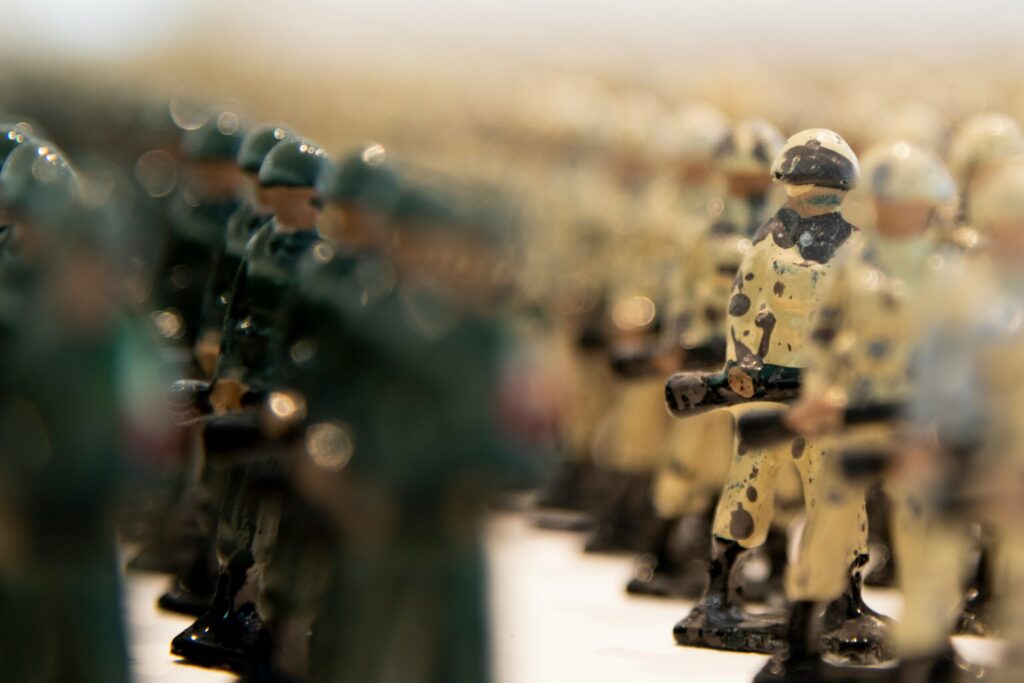
Instead of exercising scepticism as scientists and medical professionals and rigorously and thoroughly examining the justifications for all these plans – and offering well-founded criticism – the authors of this paper seem simply to want to go along with the course of militarisation in order to be at the forefront.
‘In individual EU countries – above all in Germany – we are already seeing a massive militarisation of society and the health care system, which can be implemented largely uncritically,’ says Julius Poppel, co-chair of the vdää*. “Now we are confronted with the next level of this policy, with the demand for EU-wide military coordination of the health care system. Instead of using its 200 years of experience and scientific expertise to expose these efforts as obviously economically motivated and to raise its voice for diplomacy, disarmament and peace, The Lancet is making itself the lackey of the warmongers,” Poppel continued.
We, on the other hand, must intensify our anti-war activities and work with our colleagues in Europe to do everything we can to prevent further escalation and stop the current wars.
Dr. Nadja Rakowitz, Press spokesperson for the vdää*